FIND THE FEMINISM - In this segment, Black Feminist Women and Men ask: What Black Feminist concerns were raised in this week’s reading?
Securing the Black woman’s body by pursuing careers in teaching, valuing the work of mothers, the numbers and variety of professions Black women pursued in the late 1800s, and holding women accountable for their feminism are some of the topics touched on in this clip. Michelle also re-read the passage where Rose left Rufus.
In this Circle, we focused discussion on Chapter IV: Prelude to a Movement and Chapter V: Defending Our Name, in Paula J. Giddings, "When and Where I Enter: The Impact of Black Women on Race and Sex in America." Randie Henderson was the event's moderator. She was joined by co-host L. Michelle Odom and Conversationalists Joel Jones, Venita Walker, Georgette Moses and Kim Brandon.
----------------------------------------------
Summary:
In “Chapter IV: Prelude to a Movement,” we see that Black women, just recently released from the chains of slavery, pursued the goal of saving the race with a near-religious zeal, at the end of Reconstruction. Black political power had dried up nearly overnight, and the Black family was under siege from poverty, crime, drugs, prostitution and lynching. This work took the form of founding many clubs, organizations and schools, beginning in 1880 with Mary Ann Shadd Cary’s Colored Women’s Progressive Association. Black women in the late 1800s also made unprecedented gains in education and the professions, boldly pursuing advanced degrees in medicine, law, journalism, ministry and teaching. They raised funds to support scholarships and businesses, and accumulated considerable property and wealth.
“Chapter V: Defending Our Name,” charts events culminating in formation of the National Association of Colored Women (NACW) – a fusing of Mary Church Terrell’s National League of Colored Women and the National Federation of Afro-American Women. Spurred on by the anti-lynching work of Ida B. Wells, which was successful at bringing the interest of English elites, prominent Americans had been shamed into denouncing lynching and the sort of gruesome displays as occurred in Paris, TX, with the torture, burning, lynching, and souvenir grabbing of Henry Smith. The character and morality of Black women were under attack in this period, and the rape of Black women committed by white men, was a frequent occurrence. Spurred on by such events, prominent Black women highlighted in this chapter finally found their voice through national organizing. These included women like Anna Julia Cooper, Josephine St. Pierre Ruffin, Fannie Barrier Williams, Frances Ellen Harper, Margaret Murray Washington, Rosetta Sprague and Ellen Craft.
----------------------------------------------
"’When and Where I Enter’ is an eloquent testimonial to the profound influence of African-American women on race and women's movements throughout American history. Drawing on speeches, diaries, letters, and other original documents, Paula Giddings powerfully portrays how black women have transcended racist and sexist attitudes--often confronting white feminists and black male leaders alike--to initiate social and political reform...’When and Where I Enter’ reveals the immense moral power black women possessed and sought to wield throughout their history--the same power that prompted Anna Julia Cooper in 1892 to tell a group of black clergymen, 'Only the black woman can say 'when and where I enter, in the quiet, undisputed dignity of my womanhood, without violence and without suing or special patronage, then and there the whole . . . race enters with me.'" ~ GoodReads.com.
----------------------------------------------
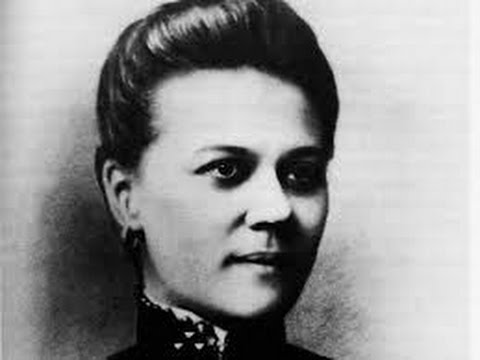
Image: Fannie Barrier Williams
----------------------------------------------
Music:
“Lights Out” by Audiobinger
Free Music Archive
https://freemusicarchive.org
----------------------------------------------
Featured Art by LaShun Beal.
----------------------------------------------
Session 6 of The Global Black Feminist Reading Circle broadcasts live February 2 to June 7, 2016, reading Paula J. Giddings' "When and Where I Enter: The Impact of Black Women on Race and Sex in America,” (2nd edition, 2007). L. Michelle Odom and Randie Henderson, co-hosts.
Please see our video archives at YouTube to catch up on issues discussed in Sessions 1 (At the Dark End of the Street), 2 (We are the Ones), 3 (Medical Apartheid), 4 (Parable of the Sower), and 5 (Parable of the Talents).
The weekly group meets on Tuesdays at 6:30 pm EST and broadcasts live events on YouTube.
Join The Global Black Feminist Reading Circle (community) on Google+ to receive invitations to the weekly Hangout, and access other documents of the group. If interested in becoming a part of our online discussion group or for other questions, contact [email protected].
Securing the Black woman’s body by pursuing careers in teaching, valuing the work of mothers, the numbers and variety of professions Black women pursued in the late 1800s, and holding women accountable for their feminism are some of the topics touched on in this clip. Michelle also re-read the passage where Rose left Rufus.
In this Circle, we focused discussion on Chapter IV: Prelude to a Movement and Chapter V: Defending Our Name, in Paula J. Giddings, "When and Where I Enter: The Impact of Black Women on Race and Sex in America." Randie Henderson was the event's moderator. She was joined by co-host L. Michelle Odom and Conversationalists Joel Jones, Venita Walker, Georgette Moses and Kim Brandon.
----------------------------------------------
Summary:
In “Chapter IV: Prelude to a Movement,” we see that Black women, just recently released from the chains of slavery, pursued the goal of saving the race with a near-religious zeal, at the end of Reconstruction. Black political power had dried up nearly overnight, and the Black family was under siege from poverty, crime, drugs, prostitution and lynching. This work took the form of founding many clubs, organizations and schools, beginning in 1880 with Mary Ann Shadd Cary’s Colored Women’s Progressive Association. Black women in the late 1800s also made unprecedented gains in education and the professions, boldly pursuing advanced degrees in medicine, law, journalism, ministry and teaching. They raised funds to support scholarships and businesses, and accumulated considerable property and wealth.
“Chapter V: Defending Our Name,” charts events culminating in formation of the National Association of Colored Women (NACW) – a fusing of Mary Church Terrell’s National League of Colored Women and the National Federation of Afro-American Women. Spurred on by the anti-lynching work of Ida B. Wells, which was successful at bringing the interest of English elites, prominent Americans had been shamed into denouncing lynching and the sort of gruesome displays as occurred in Paris, TX, with the torture, burning, lynching, and souvenir grabbing of Henry Smith. The character and morality of Black women were under attack in this period, and the rape of Black women committed by white men, was a frequent occurrence. Spurred on by such events, prominent Black women highlighted in this chapter finally found their voice through national organizing. These included women like Anna Julia Cooper, Josephine St. Pierre Ruffin, Fannie Barrier Williams, Frances Ellen Harper, Margaret Murray Washington, Rosetta Sprague and Ellen Craft.
----------------------------------------------
"’When and Where I Enter’ is an eloquent testimonial to the profound influence of African-American women on race and women's movements throughout American history. Drawing on speeches, diaries, letters, and other original documents, Paula Giddings powerfully portrays how black women have transcended racist and sexist attitudes--often confronting white feminists and black male leaders alike--to initiate social and political reform...’When and Where I Enter’ reveals the immense moral power black women possessed and sought to wield throughout their history--the same power that prompted Anna Julia Cooper in 1892 to tell a group of black clergymen, 'Only the black woman can say 'when and where I enter, in the quiet, undisputed dignity of my womanhood, without violence and without suing or special patronage, then and there the whole . . . race enters with me.'" ~ GoodReads.com.
----------------------------------------------
Image: Fannie Barrier Williams
----------------------------------------------
Music:
“Lights Out” by Audiobinger
Free Music Archive
https://freemusicarchive.org
----------------------------------------------
Featured Art by LaShun Beal.
----------------------------------------------
Session 6 of The Global Black Feminist Reading Circle broadcasts live February 2 to June 7, 2016, reading Paula J. Giddings' "When and Where I Enter: The Impact of Black Women on Race and Sex in America,” (2nd edition, 2007). L. Michelle Odom and Randie Henderson, co-hosts.
Please see our video archives at YouTube to catch up on issues discussed in Sessions 1 (At the Dark End of the Street), 2 (We are the Ones), 3 (Medical Apartheid), 4 (Parable of the Sower), and 5 (Parable of the Talents).
The weekly group meets on Tuesdays at 6:30 pm EST and broadcasts live events on YouTube.
Join The Global Black Feminist Reading Circle (community) on Google+ to receive invitations to the weekly Hangout, and access other documents of the group. If interested in becoming a part of our online discussion group or for other questions, contact [email protected].
- Category
- Arts and Crafts
Post your comment
Up Next
-

Baa Baa Black Sheep | Christmas Nursery Rhymes Collection | Baa Baa Black Sheep From Dave And Ava
-
11:27
THÉ Et CAFÉ : Bon ou Mauvais pour la Santé ?
-
02:42
Here We Go Round The Mulberry Bush | Save The Earth From Global Warming | ChuChu TV
-
08:25
Global Geography Project: South Korea
-
03:37
Café Et Thé: Bon Ou Mauvais Pour La Santé ? | Mais Pourquoi ?
-
03:56
Café vs Thé - Lequel est Le Plus Sain? | Très Curieux
-
11:53
Kids Reading Sight Words Educational Education Android GAMEPLAY VİDEO
-
00:41
Fête du Thé Magique avec Bébé Meeko ???? #shorts #kidssong #hooplakidzfranҫais
-
00:33
☕Organisons une fête de thé - Délicieux cupcakes et chocolat chaud ! ????#shorts #kidssong #ai
-
11:27
THÉ Et CAFÉ : Bon ou Mauvais pour la Santé ?
-
37:01

The NEW Numbers Song (Collection) | Learn to Count from 1 to 10 | ChuChu TV Number Rhymes for Kids
-
38:43

Are You Sleeping (Little Johny)? Plus Many More Nursery Rhymes & Animals songs for Kids by ChuChu TV
-
ساشا وماكس يعدان كعكة لعيد ميلاد أبي
-
14:20

La Famille Zombie Roule Dans Le Bus | Dessins Animés D'Halloween Pour Les Enfants | À Bébé Chansons
-
08:43

Roues Du Bus Effrayantes ???? | Chansons et Dessin animé D'Halloween | HooplaKidz Franҫais

 Loading...
Comments